

Article: A Guide to Sheen & Shimmer Inks
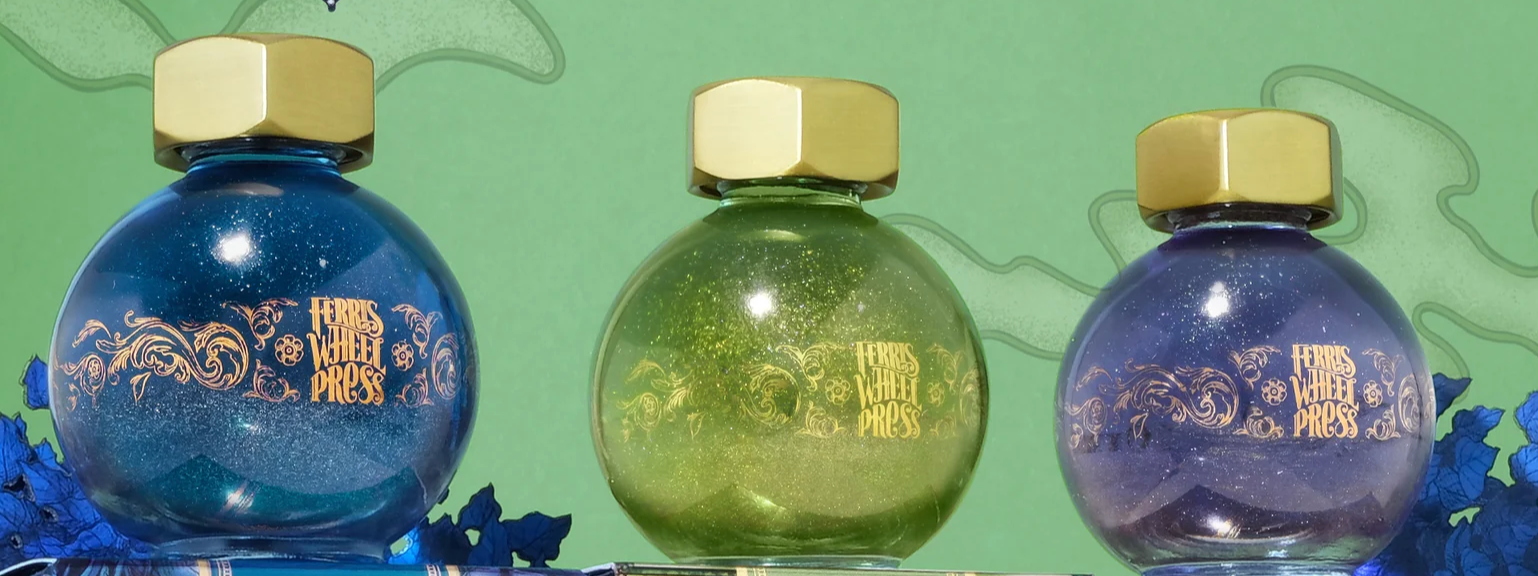
A Guide to Sheen & Shimmer Inks
Sheen and shimmer inks are some of the most visually striking options in the fountain pen world. They transform writing from simple ink-on-paper into something layered, reflective, and expressive — but they also behave very differently from standard inks. Choosing the right nib, pen, and paper can make the difference between a stunning result and a frustrating experience.
Short on time? Here's the quick version.

What are sheen and shimmer inks?
Sheen inks contain dye combinations that create a secondary color effect where ink pools more heavily on the page. For example, a dark blue ink may dry with a red metallic halo at the edges of strokes.
Shimmer inks contain fine particles (often mica) that reflect light, producing a subtle sparkle throughout your writing.
Both are designed for visual impact — journaling, creative writing, correspondence, and ink exploration — rather than purely utilitarian note-taking.
Nib size matters more than you think
Nib size directly affects how these inks look on the page.
Broader nibs show more character
Medium, Broad, stub, and italic nibs lay down more ink with each stroke. This heavier ink flow allows:
-
shimmer particles to distribute more visibly
-
sheen to develop where ink pools along stroke edges
-
shading and color variation to appear more pronounced
If your goal is to see the full personality of a sheen or shimmer ink, broader nibs almost always produce the most dramatic results.
Fine nibs produce subtler effects
Fine and Extra Fine nibs use less ink and create a thinner line. This means:
-
shimmer may be faint or difficult to see
-
sheen may appear only in slow strokes or on very smooth paper
-
color variation is more restrained
That doesn’t mean these inks won’t work in fine nibs — just that the effect will be more understated.
Ink flow and clogging considerations
This is where practical reality enters the conversation.
Shimmer inks contain particles, and any time particles move through a feed and nib, there’s potential for buildup.
Broader nibs: better flow, less clogging risk
Because broader nibs and wetter feeds move more ink:
-
particles are less likely to settle and accumulate
-
flow remains more consistent
-
cleaning is easier
This makes Medium and Broad nibs a safer choice for regular shimmer ink use.
Fine nibs: higher clogging potential
Fine nibs have narrower channels and tighter feeds, which means:
-
shimmer particles can settle more easily
-
ink flow may become inconsistent
-
skipping or hard starts may occur
If using shimmer in a Fine nib:
-
clean more frequently
-
avoid letting ink dry in the pen
-
agitate gently before writing to redistribute particles
Sheen inks behave differently
Sheen inks do not contain particles, so clogging is less of a concern. However, they are often more saturated and slow-drying, which can lead to:
-
longer dry times
-
smudging on absorbent paper
-
heavy pooling on very smooth paper
Paper plays a major role
Paper choice can dramatically affect both appearance and performance.
Smooth, fountain-pen-friendly paper:
-
enhances sheen
-
allows shimmer to sit on the surface
-
prevents feathering
Absorbent paper:
-
reduces sheen visibility
-
traps shimmer particles
-
dulls color complexity
If you want to see these inks at their best, pair them with high-quality, smooth paper designed for fountain pen use.
Maintenance expectations
Sheen and shimmer inks require slightly more care than standard inks.
Best practices:
-
clean pens more frequently
-
flush thoroughly when changing colors
-
avoid long-term storage with shimmer ink inside
-
keep pens capped to prevent drying
Pens used with shimmer inks don’t need to be “special,” but they do benefit from regular maintenance.
Choosing the right setup
If your goal is visual impact:
-
Medium or Broad nib
-
smooth fountain-pen paper
-
regular cleaning routine
A few from the shop to start with
If you want to see these effects in person: The Great Gatsby dries with a golden sheen over violet blue, Phantom of the Opera shows a striking red halo on deep cobalt, and Dracula manages both — a glistening crimson with shimmering blue glitter. On the shimmer side, I am a Cat pops with golden glitter on cool gray, and Tinker Bell dusts a pale sage green with gold, like fairy dust settling on the page.
The takeaway
Sheen and shimmer inks reward experimentation. The same ink can look completely different depending on nib size, ink flow, and paper.
Broader nibs reveal the full personality of these inks and reduce clogging risk. Finer nibs create a more restrained, practical writing experience but may require more maintenance when using shimmer.
Understanding these tradeoffs helps you choose confidently — and get the most enjoyment from inks designed to be seen, not just used.